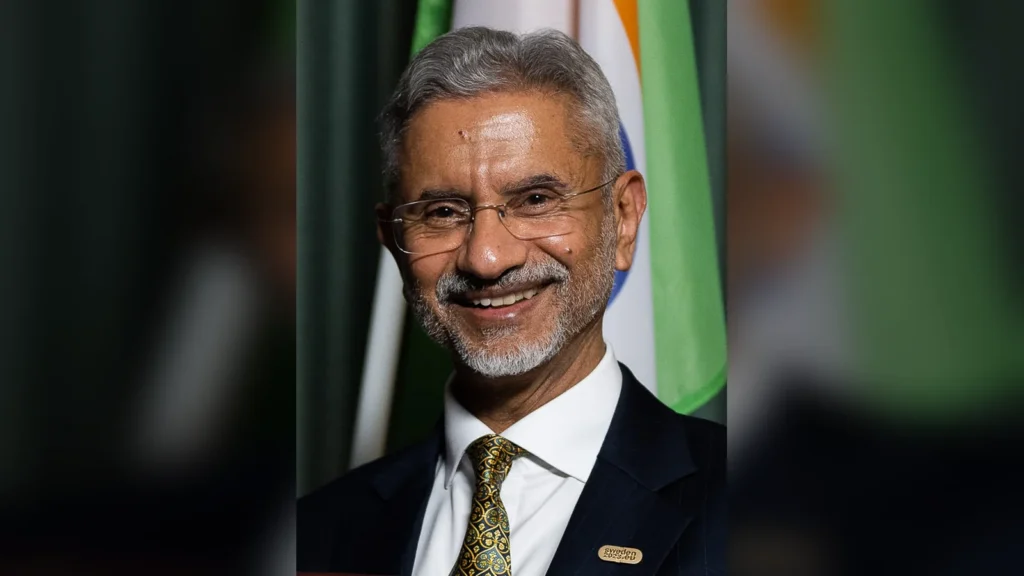
NEW YORK — External Affairs Minister S. Jaishankar delivered a pointed rebuttal to Pakistani Prime Minister Shehbaz Sharif during the General Debate of the United Nations General Assembly (UNGA) on 26 September 2026, challenging Islamabad’s narrative regarding cross-border security and water resource management.
The exchange occurred as both nations addressed the assembly, with Jaishankar directly addressing the Prime Minister’s earlier remarks. The Indian minister described Pakistan as a “serial practitioner of terrorism” and stated that such an entity cannot claim moral immunity or victimhood in international forums. He emphasized that India’s security posture is a direct response to sustained threats emanating from across the Line of Control (LoC) and the International Border (IB).
Rebuttal on Terrorism and Security
Jaishankar outlined India’s position on regional stability, noting that India has consistently called for a comprehensive approach to counter-terrorism that addresses the root causes and state-sponsored elements. He rejected the Pakistani government’s characterization of India’s actions as aggressive, asserting that India’s military and diplomatic responses are strictly defensive and aimed at protecting its citizens from terrorist attacks.
The minister referenced recent incidents, including the series of terrorist attacks in Jammu and Kashmir and other parts of India, which he attributed to groups operating from Pakistani soil. He stated that India’s intelligence assessments and on-ground realities contradict the narrative presented by Islamabad. Jaishankar urged the international community to recognize the link between state sponsorship and cross-border terrorism, a stance India has maintained in various multilateral settings, including the UN Security Council.
Indus Waters Treaty Dispute
A significant portion of Jaishankar’s address was dedicated to the Indus Waters Treaty (IWT), a 1960 agreement brokered by the World Bank that allocates the waters of the Indus River system between India and Pakistan. In response to Pakistani claims of Indian interference with water flows, Jaishankar asserted that India has always adhered to the treaty’s provisions. He stated that any allegations of violation are factually incorrect and politically motivated.
The minister highlighted that India’s infrastructure projects, including hydropower plants, are constructed in accordance with the treaty and international law. He pointed out that Pakistan’s water management issues are internal and should not be projected as a bilateral dispute. Jaishankar reiterated India’s commitment to the treaty while reserving its rights to utilize its share of the waters for development and energy security. He noted that the treaty remains a cornerstone of bilateral relations and that India is open to dialogue but not to accusations that lack factual basis.
Diplomatic Context and International Reaction
The UNGA General Debate provides a platform for heads of state and government to address global issues, and the India-Pakistan exchange drew attention from diplomats and observers. The confrontation underscores the ongoing tensions between the two nuclear-armed neighbors, which have been exacerbated by recent security incidents and diplomatic standoffs.
India’s diplomatic corps has been active in recent months, engaging with various countries to explain its position on security and water resources. The minister’s remarks align with India’s broader foreign policy objective of presenting a clear and consistent narrative on issues of national interest. He emphasized that India’s approach is one of dialogue and cooperation, but that it will not compromise on its security or sovereignty.
The response to Jaishankar’s address was mixed, with some countries acknowledging the complexity of the India-Pakistan relationship and the need for de-escalation. Others, particularly those with strategic interests in the region, called for restraint and adherence to international norms. The UNGA session is expected to continue with further discussions on regional security and cooperation, with the India-Pakistan dynamic remaining a focal point.
Analysts noted that the exchange reflects the deep-seated mistrust between the two nations and the difficulty in achieving a breakthrough on key issues. The minister’s firm stance is seen as a signal to the international community that India will not be deterred by diplomatic pressure and will continue to assert its rights and interests.
Primary Sources & Official Records
- At UNGA, Jaishankar hits back at Pakistan PM on terrorism, Indus Waters Treaty
- India hits back at Pakistan at UN, says ‘serial practitioner of terrorism’ cannot claim im
- Arguments by serial practitioner of terrorism will not stand: EAM Jaishankar slams Pakista
- UNGA 2024: Jaishankar Hits Back At Pakistani Journalist, Raises Red Sea Attacks – India To