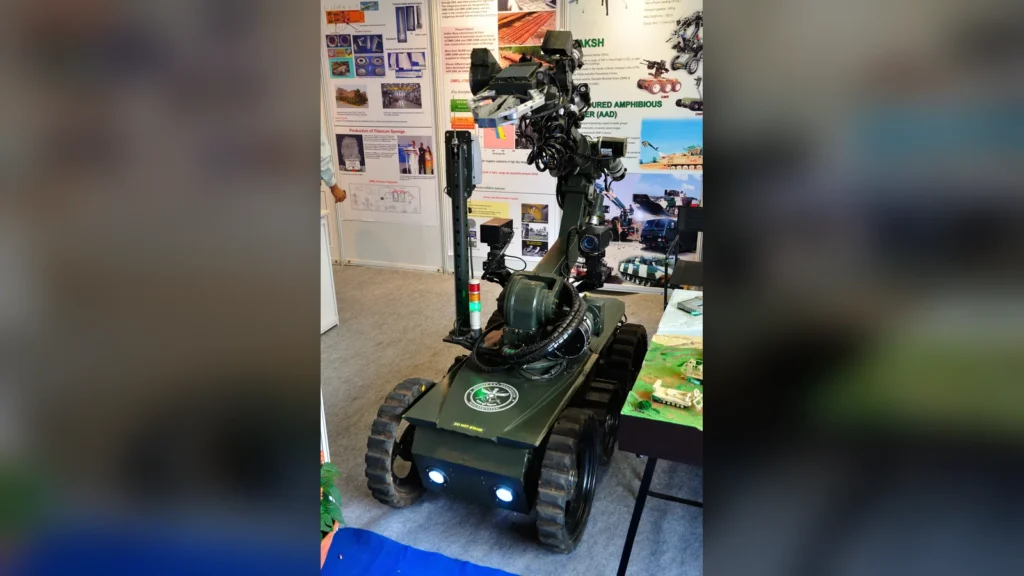
MUMBAI — The Defence Research and Development Organisation (DRDO) will supply its Daksh bomb‑disposal robot to the Pune police, officials said on Saturday. The deployment follows a series of field trials that demonstrated the robot’s ability to neutralise improvised explosive devices (IEDs) in confined spaces such as railway carriages, public transport and urban infrastructure.
Technical specifications and operational role
Developed under DRDO’s anti‑terror and anti‑sabotage programme, Daksh is a remotely operated platform equipped with a manipulator arm, high‑resolution cameras and a suite of sensors for explosive detection. The robot can be controlled from a distance of up to 500 metres and is capable of handling payloads of up to 30 kilograms, allowing it to transport or dismantle explosive devices without endangering personnel.
According to the DRDO, the robot’s modular design enables rapid reconfiguration for different mission profiles, including railway carriage inspections, vehicle searches and crowd‑control scenarios. The agency has previously tested Daksh on Indian Railways’ network, where the robot was used to clear suspected devices on moving trains without disrupting service.
Integration with Pune police
The Pune Police Commissioner’s office confirmed that a unit of three Daksh robots will be inducted into the city’s bomb‑disposal squad by the end of the month. The force plans to station the robots at strategic locations, including the Pune railway station and major traffic junctions, to provide a rapid response capability in the event of a terrorist threat.
Police officials indicated that the robots will be operated by specially trained bomb‑disposal technicians who have undergone a two‑week certification programme conducted by DRDO engineers. The training covers remote navigation, manipulator control, and safety protocols for handling hazardous materials.
Strategic implications
The addition of Daksh to the Pune police arsenal reflects a broader shift in India’s internal security strategy toward technology‑driven counter‑terrorism measures. Over the past five years, the Ministry of Home Affairs has increased funding for robotic and unmanned systems, aiming to reduce casualties among first‑responders during bomb‑related incidents.
Analysts note that the deployment aligns with the government’s “Indigenous Deterrence” policy, which prioritises domestically developed defence equipment for both military and civilian security applications. By fielding a home‑grown robot, the police avoid reliance on imported systems and benefit from a platform that can be customised to Indian operational environments.
Future prospects
DRDO officials have indicated that further variants of Daksh are under development, including models with enhanced explosive‑neutralising agents and AI‑based threat assessment capabilities. The agency plans to expand the robot’s deployment to other metropolitan police forces, including Mumbai and Delhi, pending successful outcomes of the Pune trial.
Stakeholders from the transport sector have welcomed the move, citing the potential for reduced service disruptions and increased passenger confidence. The Indian Railways’ safety division has expressed interest in integrating Daksh into its own emergency response framework, particularly for high‑traffic routes.