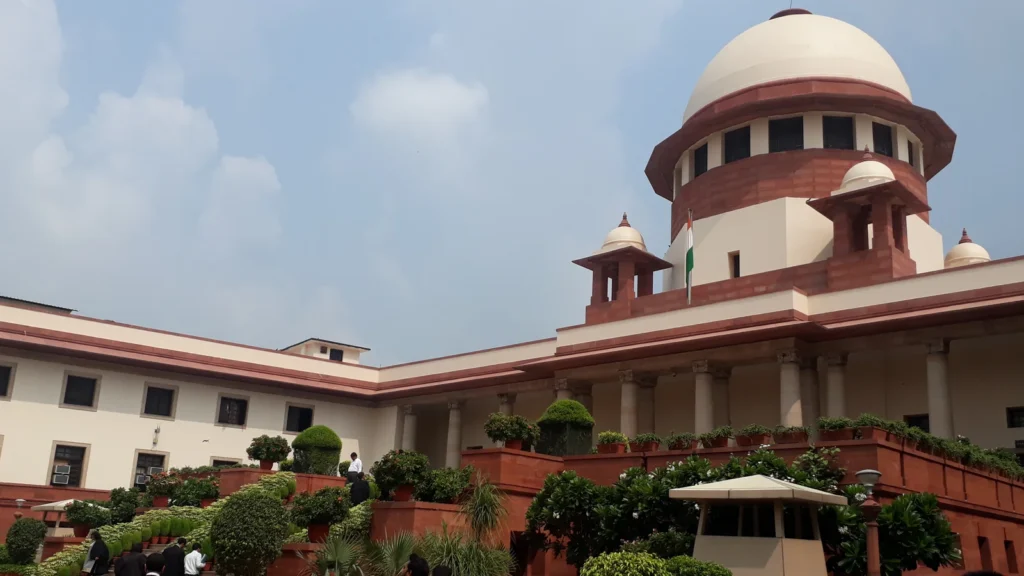
NEW DELHI — On Thursday, a two‑judge bench of the Supreme Court refused to entertain a public interest litigation that sought a central law and uniform guidelines to curb ragging in schools. The court held that the matter falls within the purview of existing regulatory mechanisms overseen by the Ministry of Education and the Central Board of Secondary Education (CBSE).
Background of the petition
The petition, filed earlier this year, argued that sporadic incidents of ragging across schools and junior colleges indicated a systemic failure of current rules. It called for a comprehensive central statute that would define ragging, prescribe mandatory preventive measures, and impose stringent penalties for violations. The petitioner also sought direction for the Ministry to issue uniform guidelines applicable to all educational institutions under its jurisdiction.
Court’s reasoning
In its order, the bench observed that the Ministry of Education already issues detailed anti‑ragging guidelines, which CBSE enforces through its affiliation framework. The court noted that these guidelines require institutions to form anti‑ragging committees, conduct regular awareness programmes, and report incidents to the National Anti‑Ragging Helpline. It further stated that a new central law would duplicate existing provisions and could disrupt the balance of powers between the central and state education authorities.
Reactions
The petitioner’s counsel described the decision as a “setback for students who continue to face intimidation in classrooms.” The counsel added that the court’s refusal to consider a fresh legislative approach leaves a legislative vacuum that only Parliament can fill.
The Ministry of Education, through an official statement, said it remains committed to strengthening anti‑ragging measures. The ministry highlighted that the existing guidelines are periodically reviewed and that the CBSE has increased monitoring visits to affiliated schools following a rise in reported cases in 2025.
Representatives of CBSE echoed the ministry’s position, noting that the board has introduced a digital reporting portal and mandatory training for faculty members on handling ragging complaints. They urged schools to fully implement the current framework and assured that the board would take “strict action” against institutions that fail to comply.
Legal context
The Supreme Court has previously intervened in ragging cases, most notably in 2022 when it directed the Ministry to formulate comprehensive anti‑ragging guidelines. Since then, the Ministry has issued several circulars, and the CBSE has incorporated anti‑ragging clauses into its affiliation agreement. However, the court’s present order underscores that any further legislative step must originate from Parliament rather than judicial mandate.
Implications for schools
Educational institutions are advised to review their anti‑ragging policies in light of the court’s affirmation of existing guidelines. Schools that have not yet established anti‑ragging committees or failed to submit annual compliance reports may face scrutiny from the CBSE and state education departments.
Legal experts caution that while the Supreme Court’s refusal does not preclude future legislative action, it signals that the judiciary will not compel the central government to enact a new law without clear parliamentary intent. They recommend that stakeholders continue to engage with the Ministry and state authorities to address gaps in implementation.
Primary Sources & Official Records
- Supreme Court refuses to entertain PIL for Central law, guidelines to curb ragging in scho
- SC refuses to entertain plea seeking law to curb bullying, ragging in schools – India Toda
- Supreme Court Refuses to Stay Rajasthan Cricket Association Elections; Directs Results Not
- SC refuses to entertain PIL for Central law, guidelines to curb ragging in schools – ET Ed