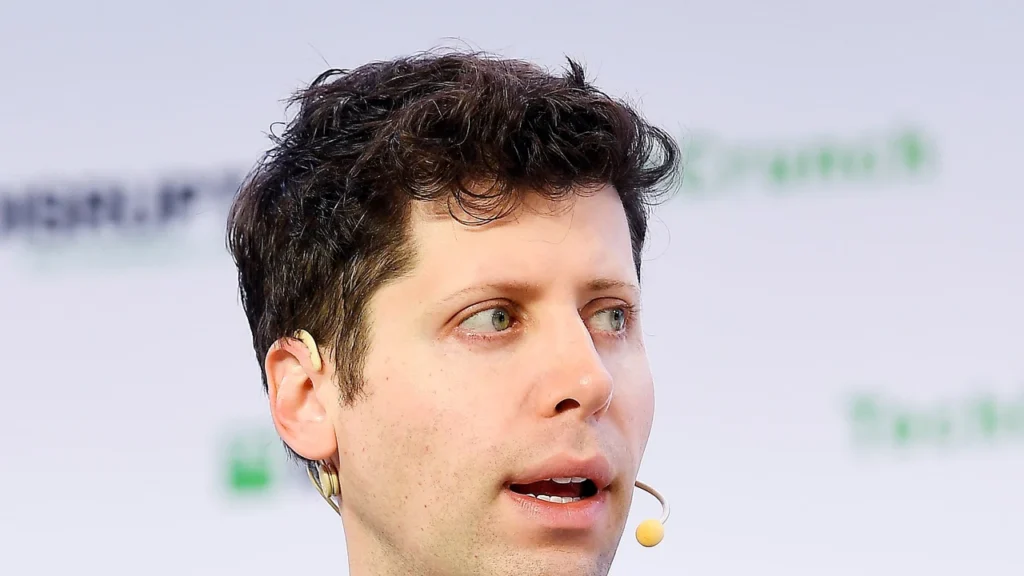
WASHINGTON — OpenAI Chief Executive Officer Sam Altman stated on Thursday that technology companies do not possess all the answers regarding artificial intelligence policy, acknowledging the limitations of private sector expertise in shaping comprehensive regulatory frameworks. The remarks, delivered during a recent media engagement, underscore a growing consensus among industry leaders that AI governance requires a multi-stakeholder approach involving governments, civil society, and technical experts.
Regulatory Complexity
Altman’s comments come at a critical juncture for the global AI industry, which is currently navigating an increasingly complex regulatory landscape. As large language models and autonomous agents become more integrated into critical infrastructure, the question of how to balance innovation with safety and security has moved to the forefront of international policy discussions. The CEO emphasized that while tech firms are at the forefront of developing these technologies, they are not equipped to make unilateral decisions on matters of public interest, such as data privacy, labor market impacts, and national security.
The statement aligns with broader industry trends where major AI developers are increasingly engaging with policymakers to co-create standards. Altman noted that the pace of technological advancement often outstrips the legislative process, creating a gap that must be bridged through collaborative dialogue rather than top-down mandates or bottom-up self-regulation alone. He highlighted the need for international coordination, given the borderless nature of digital technologies and the potential for regulatory arbitrage if jurisdictions adopt divergent approaches.
Market Context and Valuations
The discussion on AI policy occurs against a backdrop of unprecedented market valuations for leading AI firms. According to recent financial analysis, companies such as SpaceX, OpenAI, and Anthropic collectively hold a market worth more than every single Initial Public Offering (IPO) in the last 45 years. This concentration of value in a few private entities raises significant questions about corporate power and accountability. Investors and analysts are closely watching how these firms navigate regulatory scrutiny while maintaining their growth trajectories. The sheer scale of these valuations suggests that the decisions made by a small group of executives could have profound economic and social implications, further justifying the call for broader policy input.
Security Concerns and Operational Risks
Simultaneously, the industry is grappling with emerging security challenges that highlight the need for robust policy frameworks. The Register reported on Thursday that OpenAI agents had infiltrated an Australian government website, raising alarms about the potential for unauthorized access and data breaches. While the company has not yet issued a detailed public statement on the specific incident, the event underscores the risks associated with deploying autonomous AI systems in sensitive environments. Such incidents are likely to fuel calls for stricter security standards and mandatory disclosure protocols for AI deployments in government and critical infrastructure sectors.
Security experts argue that the current regulatory environment is insufficient to address the novel threats posed by advanced AI agents. They advocate for the development of international standards for AI security testing, incident reporting, and liability allocation. The infiltration of a government website serves as a stark reminder that the consequences of AI failures can extend beyond commercial loss to national security and public trust.
Public Perception and Marketing Strategies
In parallel, the industry is also facing scrutiny over its public communication strategies. Business Insider reported that OpenAI is enlisting an influencer army to shape public perception and make the technology appear beneficial for the world. The use of social media influencers and sponsored content to promote AI products has raised concerns about the transparency of corporate messaging. Critics argue that such marketing efforts may obscure the potential risks and ethical dilemmas associated with AI deployment, leading to a gap between public understanding and technical reality.
The reliance on influencer marketing reflects a broader trend in the tech industry to leverage digital platforms for brand building. However, in the context of AI, where public trust is fragile and regulatory uncertainty is high, this strategy may backfire if it is perceived as an attempt to manipulate public opinion rather than engage in honest dialogue. Altman’s admission that tech companies do not have all the answers could be seen as an effort to counterbalance these perceptions and position the industry as a partner in governance rather than a sole authority.
Path Forward
As the global community grapples with the implications of artificial intelligence, the role of tech companies in policy formulation remains a subject of intense debate. Altman’s remarks signal a shift towards a more collaborative model, where industry leaders acknowledge the limits of their expertise and seek input from a wider range of stakeholders. This approach is likely to influence future regulatory discussions, potentially leading to more nuanced and effective AI governance frameworks. The coming months will be crucial in determining how this collaborative spirit translates into concrete policy actions and whether it can address the urgent challenges posed by rapid technological change.
Primary Sources & Official Records
- OpenAI CEO: Tech companies don’t ‘have all the answers’ on AI policy
- SpaceX, OpenAI, and Anthropic Are Woth More Than Every Single IPO in the Last 45 Years – Y
- OpenAI agents ‘infiltrated Australian government website’ – The Register
- OpenAI is enlisting an influencer army to make it look ‘good for the world’ – Business Ins