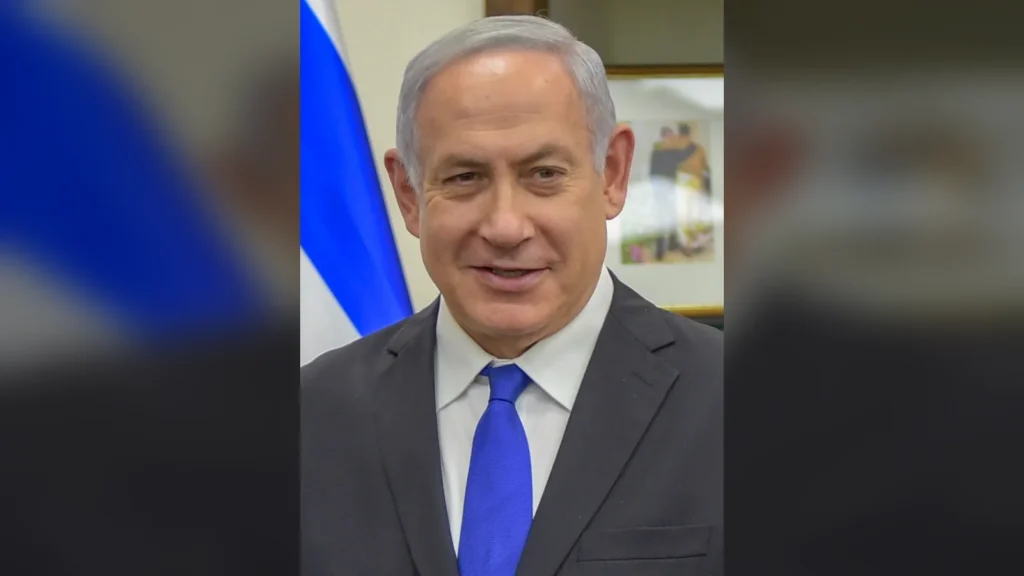
NEW YORK — Israeli Prime Minister Benjamin Netanyahu defended Israel’s ongoing military campaigns in Lebanon and Gaza on Wednesday, addressing the United Nations General Assembly in New York as a significant number of delegates walked out in protest before he began his remarks. The address, delivered during the high-level week of the 81st session of the General Assembly, marked a sharp escalation in diplomatic tensions as Netanyahu sought to frame Israel’s security posture as a necessary response to existential threats from regional adversaries.
The Prime Minister’s speech, which lasted approximately 45 minutes, focused heavily on the concept of a “Middle East of peace” that he argued could only be achieved through the dismantling of hostile infrastructure. He specifically referenced the military operations against Hezbollah in Lebanon and the ongoing conflict in Gaza, asserting that Israel had no choice but to act preemptively to prevent further attacks. Netanyahu stated that the region was witnessing a shift in the balance of power, with Israel emerging as the dominant military force capable of dictating terms of security.
Protesters and delegates from several nations, including representatives from the Arab League and the Non-Aligned Movement, exited the General Assembly hall as Netanyahu took the podium. The walkout was a coordinated gesture of dissent against what critics described as a justification for continued military aggression. Despite the disruption, Netanyahu proceeded with his address, maintaining a firm tone as he outlined Israel’s strategic objectives.
In his remarks, Netanyahu emphasized the need for a new security architecture in the Middle East, one that would ensure Israel’s safety while allowing for economic cooperation with neighboring states. He proposed a framework for regional integration that included joint energy projects and trade agreements, but only under the condition that hostile groups were neutralized. The Prime Minister also addressed the issue of the Palestinian state, reiterating Israel’s position that a two-state solution was not feasible under current circumstances, citing security concerns and the lack of a reliable partner on the other side.
The speech drew immediate reactions from international leaders. The United States, while maintaining its support for Israel’s right to self-defense, called for a de-escalation of tensions and a return to diplomatic channels. European Union officials expressed concern over the humanitarian impact of the military operations in Gaza and Lebanon, urging Israel to adhere to international humanitarian law. Meanwhile, several developing nations condemned the speech, viewing it as a rejection of multilateralism and a threat to regional stability.
Analysts noted that Netanyahu’s address was a strategic move to rally international support for Israel’s military actions, particularly in the context of growing global scrutiny over the humanitarian crisis in Gaza. The Prime Minister’s emphasis on security and regional integration was seen as an attempt to shift the narrative from the humanitarian toll of the conflict to the broader geopolitical implications. However, critics argued that the speech failed to address the root causes of the conflict and instead reinforced a cycle of violence.
The United Nations Secretary-General, who was present in the hall, later issued a statement calling for restraint and dialogue. He emphasized the need for all parties to respect international law and work towards a peaceful resolution of the conflict. The Secretary-General also highlighted the urgent need for humanitarian access to affected areas, noting that the situation on the ground remained dire.
As the General Assembly session continued, delegates from various countries engaged in bilateral meetings to discuss the implications of Netanyahu’s speech. The event underscored the deep divisions within the international community over the Middle East conflict, with some nations advocating for a stronger stance against Israel and others calling for a balanced approach that prioritizes diplomacy.
Primary Sources & Official Records
- Netanyahu defends Israeli military action as delegates walk out before UN speech
- Netanyahu defends Israeli military action as delegates walk out before UN speech – BBC
- Delegates walk out as Netanyahu defends Israel’s regional wars in UN address – Middle East
- At UN, Netanyahu defends Israel as delegates walk out – Georgia Today