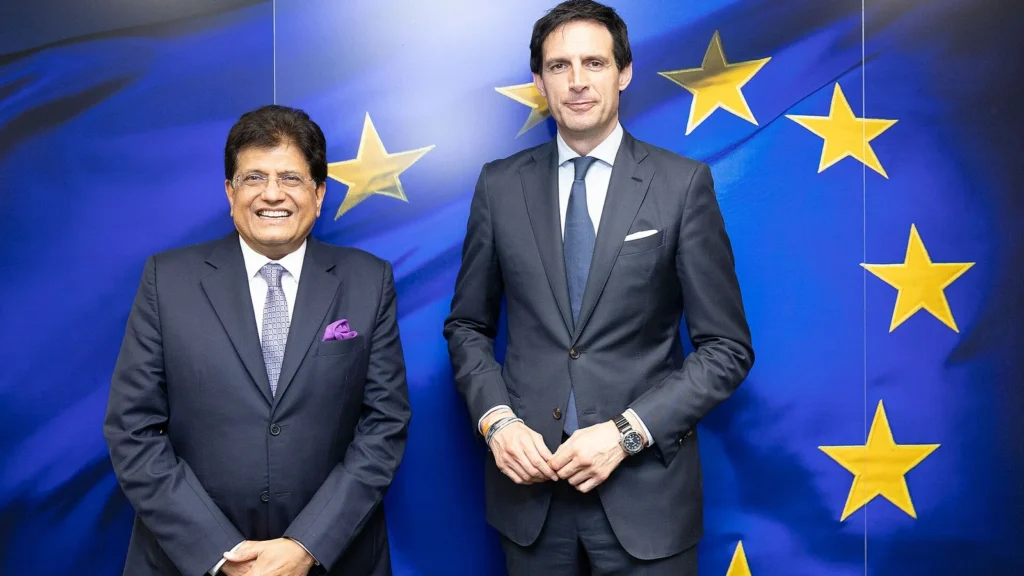
NEW DELHI — Commerce Minister Piyush Goyal said on Thursday that India is aiming for $1 trillion in exports by the end of 2026, even as global trade growth remains muted. The minister highlighted a package of policy measures designed to boost manufacturing, improve logistics and expand market access for Indian goods.
India’s export ambition set against a backdrop of global uncertainty
Goyal’s remarks came as the World Trade Organization projected a 2.5 % rise in global merchandise trade for 2026, the slowest pace in a decade. The minister noted that India’s export growth in 2025 had outpaced the global average, driven largely by the services sector and a surge in high‑value manufacturing.
In a statement released by the Ministry of Commerce, Goyal said that the government’s focus on “infrastructure upgrades, digital trade facilitation and targeted incentives for key sectors” would help sustain export momentum. He added that the “new tariff‑reduction framework” would lower costs for exporters and improve competitiveness in key markets such as the United States, the European Union and the Gulf Cooperation Council.
India’s trade statistics for the fiscal year 2024‑25 showed a 6.8 % increase in merchandise exports, reaching ₹4.4 trillion, according to the Ministry’s monthly trade bulletin. The services export component grew by 8.2 %, bringing the total export value to ₹7.9 trillion. The trade surplus widened to ₹1.1 trillion, a record for the fourth consecutive year.
Goyal also highlighted the role of the “Make in India” initiative, which has attracted foreign direct investment in high‑tech and green‑energy sectors. The minister said that the government’s recent policy on “single‑window clearance” for export‑oriented units had reduced processing times by 30 % and cut compliance costs.
While acknowledging the challenges posed by protectionist measures in some partner economies, Goyal stressed that India’s diversified export basket and robust domestic demand would cushion the impact of a weaker global environment. He noted that the country’s top export destinations—China, the United States, the United Kingdom and the United Arab Emirates—had shown steady demand for Indian pharmaceuticals, textiles and information technology services.
In addition to policy reforms, the minister pointed to the “Digital Export Facilitation Portal” launched in 2025, which has processed over 15,000 export orders in its first year. The portal provides real‑time tracking of customs clearance, payment settlement and compliance documentation.
Goyal’s target aligns with the government’s 2025‑26 economic blueprint, which sets a 7 % growth rate for the services sector and a 6 % growth rate for manufacturing. The blueprint also calls for a 10 % increase in the export‑to‑GDP ratio, a key indicator of export competitiveness.
Industry associations welcomed the minister’s commitment. The Confederation of Indian Industry (CII) released a statement saying that the export target was “ambitious yet achievable” given the current trajectory of domestic reforms. The Federation of Indian Chambers of Commerce & Industry (FICCI) added that the “policy mix” would help Indian exporters navigate the evolving global trade landscape.
Analysts noted that the $1 trillion goal would require a sustained annual growth rate of roughly 9 % in export value, a figure that exceeds the current 6.8 % growth rate for merchandise exports. They cautioned that achieving this target would depend on continued policy support, infrastructure development and the ability to tap new markets.
Goyal concluded that the government would monitor progress through quarterly trade reviews and adjust policies as needed. He urged exporters to leverage the new incentives and digital tools to expand their reach.