NEW YORK — Kenyan President William Ruto addressed the United Nations General Assembly on Wednesday, arguing that the principle of equality is fundamentally compromised by the structure of the Security Council, where women are excluded from permanent representation.
Speaking during the high-level week of the 81st session of the General Assembly, Ruto stated that the current composition of the Council fails to reflect the demographic reality of the global population. He noted that while women constitute approximately half of the world’s population, they remain absent from the five permanent seats that hold veto power over international security decisions.
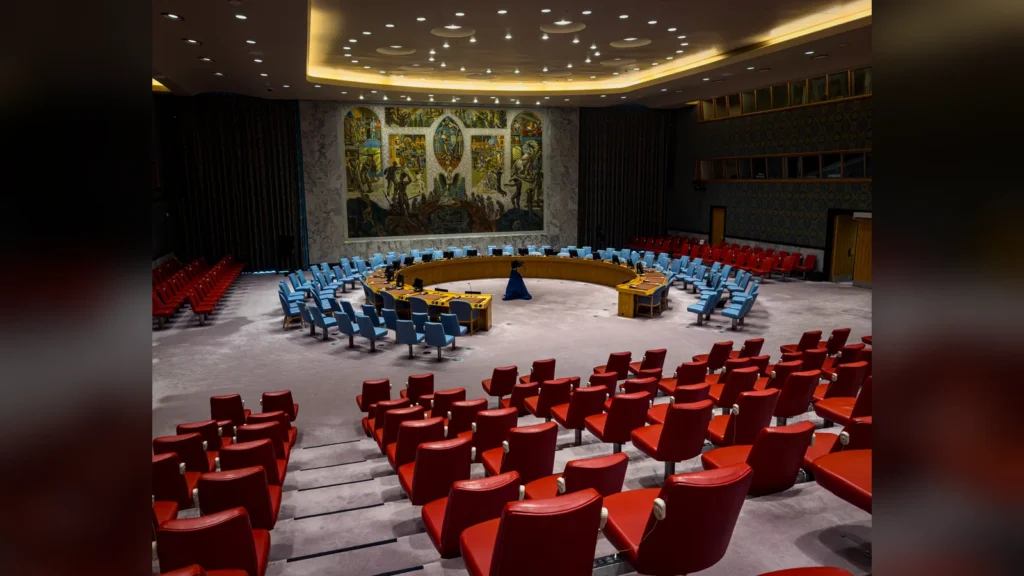
“Equality ends at the doors of the Security Council,” Ruto said, emphasizing that the exclusion of women from the highest decision-making body on global security undermines the legitimacy of the institution. He called for a comprehensive reform of the Council to ensure that women are not only present in the room but also hold decisive voting power.
The President’s remarks align with a broader push by African Union member states for Security Council reform. The African Union has long advocated for two additional permanent seats for African nations, arguing that the current structure, established in 1945, is outdated and does not represent the contemporary geopolitical landscape. Ruto, who currently serves as a non-permanent member of the Security Council for Kenya, has been a vocal proponent of this agenda.
During his address, Ruto highlighted the disparity between the rhetoric of gender equality promoted by international bodies and the structural realities of global governance. He pointed out that while the UN has made significant strides in promoting women’s rights and gender parity in various sectors, the Security Council remains a bastion of male-dominated decision-making. This, he argued, sends a mixed message to the global community and hinders the effective implementation of peace and security mandates.
The President also referenced the UN’s Sustainable Development Goals, particularly Goal 5, which aims to achieve gender equality and empower all women and girls. He stated that true progress on this goal is impossible without addressing the structural inequalities embedded in international institutions. “We cannot claim to be working towards a more just and equitable world while excluding half of humanity from the table where the most critical decisions are made,” Ruto said.
Security Council reform has been a contentious issue within the UN for decades. The five permanent members—China, France, Russia, the United Kingdom, and the United States—have historically resisted changes to the Council’s composition, citing the need for stability and the complexity of negotiations. However, pressure from developing nations, particularly in Africa and Asia, has intensified in recent years. The African Union’s position paper on Security Council reform, adopted in 2022, calls for the expansion of the Council to include more permanent and non-permanent seats for African countries.
Ruto’s speech was part of a series of addresses by world leaders focusing on global challenges, including climate change, conflict, and inequality. The General Assembly’s high-level week provides a platform for heads of state to articulate their priorities and engage in diplomatic dialogue. The issue of Security Council reform is expected to feature prominently in the discussions, with several leaders expected to echo Ruto’s call for greater inclusivity and representation.
Observers noted that Ruto’s intervention was a strategic move to position Kenya as a leader in the push for institutional reform. By linking gender equality to Security Council reform, Ruto sought to broaden the appeal of the agenda and garner support from a wider coalition of member states. The President’s remarks were welcomed by several African leaders and civil society organizations, who have long advocated for a more representative and accountable Security Council.
The UN Secretary-General, who has also called for Security Council reform, is expected to address the General Assembly in the coming days. The Secretary-General’s report on the work of the Organization will likely include a section on institutional reform, including the Security Council. The report will provide an overview of the progress made in recent years and outline the challenges that remain.
As the General Assembly continues its high-level week, the issue of Security Council reform is likely to remain a focal point of debate. The outcome of the discussions will depend on the willingness of the permanent members to engage in meaningful negotiations and the ability of developing nations to build a cohesive coalition. Ruto’s speech has added momentum to the reform agenda, highlighting the urgent need for a more inclusive and representative global governance system.