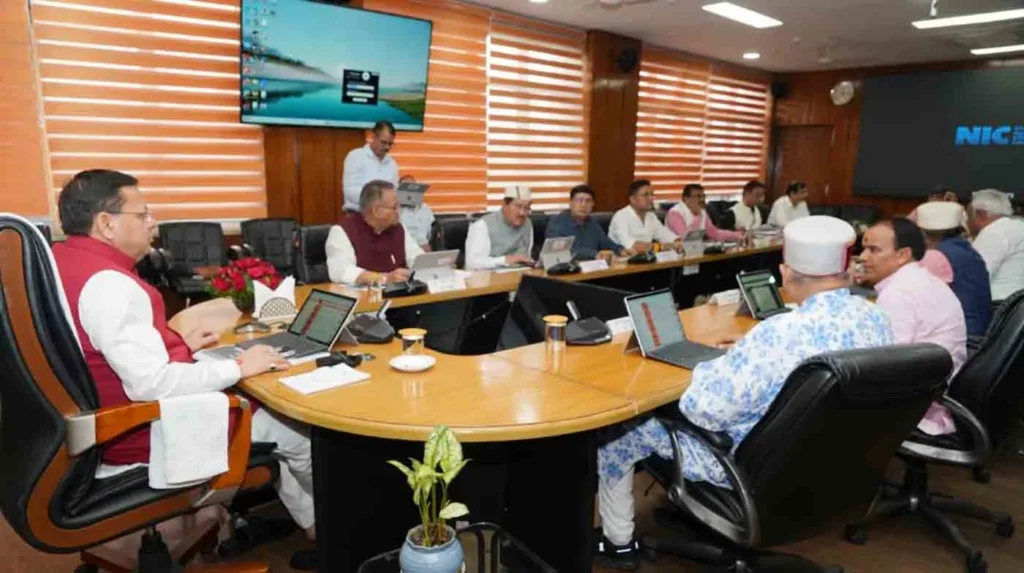
NEW DELHI — The cabinet approved an increase in the Minimum Support Prices (MSPs) for major Kharif crops for the 2026‑27 season on 23 September 2026, a move that Prime Minister Narendra Modi hailed as a win for farmers. The decision, announced in a press briefing at the Prime Minister’s Office, lifts the MSPs for rice, maize, cotton and pulses, according to a statement released by the Ministry of Agriculture and Farmers Welfare.
Cabinet Decision and Immediate Impact
The cabinet meeting, chaired by Prime Minister Modi, was held on 22 September 2026 and concluded with the approval of the MSP hike. The Ministry of Agriculture and Farmers Welfare will implement the new prices through the Agricultural Produce Market Committee (APMC) system across the country. The hike is expected to increase the purchase price for farmers by a few rupees per quintal, depending on the crop and region, and is aimed at improving the income of farmers in states such as Uttar Pradesh, Bihar, Madhya Pradesh and Rajasthan.
Context of the MSP Policy
MSPs are set by the government to provide a guaranteed price to farmers for their produce, ensuring a minimum return on their investment. The policy has been a key tool in stabilising farm incomes and preventing price volatility. In previous years, the government has adjusted MSPs annually to reflect changes in input costs, inflation and market conditions. The 2026‑27 hike follows a similar pattern of incremental increases that have been implemented since the 2015‑16 season.
Prime Minister’s Remarks
Prime Minister Modi, speaking at the press briefing, said, “The government remains committed to ensuring that farmers receive fair and competitive prices for their produce. This increase in MSPs for Kharif crops is a step towards that goal.” He added that the decision would help farmers recover costs and improve their livelihoods. The Prime Minister also highlighted the role of the Ministry of Agriculture and Farmers Welfare in monitoring the implementation of the new prices.
Implementation and Monitoring
The Ministry will coordinate with state governments and APMC authorities to roll out the new MSPs. Farmers will be notified through official channels, and the new prices will be reflected in the APMC trading system from the beginning of the 2026‑27 Kharif season. The government will monitor the impact of the hike on market prices and farmer incomes, and will adjust the policy if necessary.
Reactions from Stakeholders
Farmers’ associations across the country welcomed the decision. The All India Farmers’ Union (AIFU) said that the hike would provide a much-needed boost to the incomes of small and marginal farmers. The Union also urged the government to ensure that the new prices are implemented uniformly across all states.
Industry bodies, including the Indian Farmers’ Fertiliser Cooperative (IFFCO), expressed support for the move, noting that a stable MSP would encourage investment in agricultural inputs. The National Farmers’ Union (NFU) welcomed the decision but called for a transparent mechanism to monitor the implementation of the new prices.
Future Outlook
The government has indicated that it will continue to review MSPs annually, taking into account inflation, input costs and market dynamics. The Ministry of Agriculture and Farmers Welfare will release a detailed circular outlining the new MSPs for each crop and the dates of implementation. The government also plans to strengthen the APMC system to ensure that farmers receive the benefits of the hike in a timely manner.