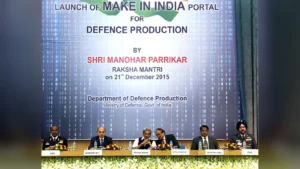
NEW DELHI — India’s defence ministry announced a comprehensive fact sheet on 28 September 2026 that charts the country’s progress toward self‑reliance in national security equipment and capabilities. The document, issued by the Press Information Bureau, outlines the growth of domestic production of aircraft, naval platforms, missiles and other critical systems, and stresses that the strategy is part of a broader effort to reduce dependence on foreign suppliers.
Domestic production gains momentum
The fact sheet lists a series of milestones reached over the past decade. It notes that the Indian Armed Forces now operate a larger share of indigenously built platforms, including the Tejas light combat aircraft, the Arjun main battle tank, and the BrahMos missile family. It also highlights the expansion of the Defence Research and Development Organisation’s (DRDO) portfolio, with new projects in hypersonic weapons, autonomous systems and cyber‑defence. The ministry’s statement stresses that these achievements are a result of sustained investment in research, development and manufacturing, and that they contribute to a more resilient national security architecture.
Budgetary support and policy framework
In the same release, the ministry cited the Defence Production Policy 2025, which earmarks 30 % of the defence budget for domestic procurement. The policy also introduces a “Buy Indian” directive that prioritises local suppliers for all major procurement contracts. The fact sheet reports that the Ministry of Defence has signed over 200 contracts with Indian firms in the past year, a 15 % increase from the previous fiscal period. It also references the Defence Procurement Procedure 2024, which streamlines approvals for indigenous projects and reduces lead times for critical equipment.
Strategic partnership with the United States
While the fact sheet focuses on domestic capabilities, it also acknowledges the role of international cooperation in accelerating technology transfer and joint development. The U.S. ambassador to India, Sergio Gor, recently spoke at a briefing on the Indo‑US defence partnership. In an interview with Defence.in, he said that the joint exercise Yudh Abhyas, conducted in the Indian Ocean region, demonstrates the growing strength of the partnership and the complementary nature of India’s self‑reliance efforts with U.S. advanced technology. The Indian Awaaz also reported that Ambassador Gor praised the exercise as a platform for sharing best practices and enhancing interoperability between the two navies.
Yudh Abhyas: a test of interoperability
Yudh Abhyas, the annual joint naval exercise between India and the United States, was held from 12 to 18 September 2026. The exercise included complex anti‑submarine warfare drills, joint air‑sea operations and a coordinated maritime security exercise in the Arabian Sea. According to the Defence.in report, the exercise was the largest Indo‑US naval exercise in the last decade and involved more than 30,000 personnel from both navies. The event was seen as a key milestone in the implementation of the 2024 Indo‑US defence agreement, which aims to deepen cooperation in areas such as cyber‑security, space and missile defence.
Implications for national security
Defence analysts say that India’s dual focus on self‑reliance and strategic partnership is designed to create a layered security posture. Domestic production reduces the risk of supply chain disruptions, while joint exercises and technology sharing with the United States enhance operational readiness and access to cutting‑edge systems. The Ministry of Defence’s fact sheet notes that the country’s defence spending has risen to 2.1 % of GDP in 2026, a level that supports both indigenous development and international collaboration.
Future outlook
Looking ahead, the ministry has outlined a roadmap to achieve 50 % indigenous procurement by 2030. This target is part of the broader “Make in India” initiative and is supported by incentives for private sector participation, including tax breaks and streamlined licensing. The fact sheet also highlights upcoming projects such as the indigenous hypersonic missile, the next‑generation naval frigate, and a domestic drone platform for surveillance and strike missions.
Conclusion
India’s defence strategy, as presented in the 28 September 2026 fact sheet, underscores a balanced approach that blends self‑reliance with robust international partnerships. The joint exercise Yudh Abhyas and the comments from the U.S. ambassador illustrate how these two elements reinforce each other, ensuring that India can safeguard its national security interests while maintaining strategic flexibility.