NEW DELHI — India’s defence industry has entered a new phase of self‑reliance, with the Press Information Bureau (PIB) reporting on 27 September 2026 that domestic production of key weapons systems has risen sharply. The fact sheet, released by the Ministry of Defence, highlighted a 12% increase in the value of defence manufacturing in the previous fiscal year, bringing the sector’s output to ₹3.5 lakh crore. It also noted that 65% of the equipment used by the Indian Armed Forces is now sourced from Indian manufacturers, a rise from 58% in 2025.
Domestic Production Gains Momentum
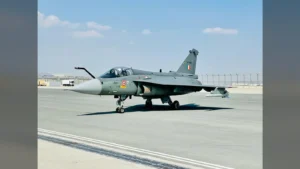
The 2026 fact sheet lists several flagship projects that have reached commercial production. The Light Combat Aircraft (LCA) Tejas, the indigenous fighter jet, has entered its fourth production batch, with 30 units delivered to the Indian Air Force. The Defence Research and Development Organisation (DRDO) has also completed the first phase of the Advanced Tactical Radar (ATR) project, which is expected to replace older radar systems in coastal and air defence units.
In the naval domain, the Indian Navy has commissioned the first indigenously built stealth frigate, the INS Shivalik, which incorporates the latest radar‑absorbing composite materials developed by the Indian Institute of Technology (IIT) Madras. The ship’s propulsion system is powered by a domestically produced 4‑stroke diesel engine, a first for a warship of its class.
India‑US Defence Partnership Deepens
While domestic production has accelerated, India has also strengthened its strategic partnership with the United States. The Indian Awaaz and Defence.in outlets reported that US Ambassador Sergio Gor, during a recent visit to New Delhi, praised the growing cooperation between the two countries. He noted that the joint exercise Yudh Abhyas, conducted in the Indian Ocean region, showcased the interoperability of Indian and US forces.
Ambassador Gor said that the exercise “reflects the growing strength of the India‑US defence partnership.” The statement was echoed in a press briefing by the US Embassy, which highlighted the joint procurement of advanced missile systems and the sharing of intelligence on maritime security.
Strategic Exercises and Operational Readiness
Yudh Abhyas 2026, the largest Indo‑US joint exercise to date, involved 12,000 troops from both navies and air forces. The exercise focused on anti‑submarine warfare, air defence, and joint command and control. According to the Defence Ministry’s briefing, the exercise demonstrated the ability of Indian forces to operate alongside US units in complex maritime environments.
In addition to Yudh Abhyas, the Indian Army conducted a series of high‑altitude training drills in the Ladakh region, aimed at improving the readiness of troops in the Himalayan frontier. The drills were part of a broader initiative to enhance the operational capability of the Indian Armed Forces in the face of evolving security challenges.
Policy Framework and Future Outlook
The 2026 PIB fact sheet also outlined the government’s policy framework for sustaining defence self‑reliance. It cited the Defence Production Policy 2025, which offers tax incentives and streamlined approvals for companies investing in critical defence technologies. The policy also encourages joint ventures between Indian firms and foreign partners, with a focus on technology transfer and skill development.
According to the Ministry, the government plans to increase the defence budget to 2.5% of GDP by 2030, with a particular emphasis on research and development. The policy framework aims to reduce dependence on imports for high‑tech components such as micro‑electronics and advanced materials.
Industry Response and Civil Society Perspectives
Industry bodies, including the Confederation of Indian Industry (CII) Defence and Aerospace Committee, welcomed the PIB’s figures and stressed the importance of continued investment in indigenous research. A spokesperson for the committee said that the sector’s growth would create over 100,000 new jobs by 2030.
Civil society groups have also highlighted the strategic benefits of self‑reliance. A representative from the Centre for Policy Research (CPR) noted that reduced reliance on foreign suppliers enhances national security and promotes technological innovation.