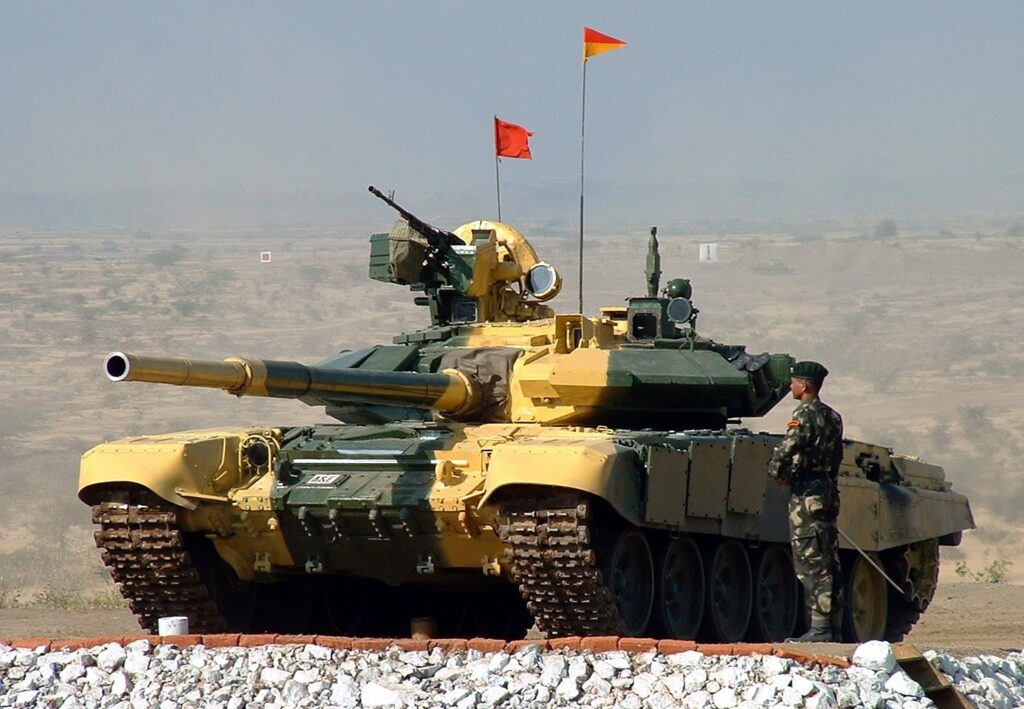
NEW DELHI — The Ministry of Defence (MoD) has signed a contract worth Rs 586 crore for the procurement of auxiliary power units (APUs) for the Indian Army’s T-72 and T-90 main battle tanks, a move aimed at modernizing the maintenance infrastructure of the country’s largest armored fleet. The order, finalized in late September 2026, marks a critical step in addressing the long-standing logistical challenges associated with maintaining Russian-origin heavy armor platforms in the Indian context.
The contract, reported by official state media and defense analysts on September 21, 2026, involves the supply of specialized APUs that allow tanks to operate essential systems—such as air conditioning, communication equipment, and radar—without running the main engine. This capability is vital for extending the operational life of the vehicles and reducing fuel consumption during static deployments, particularly in the high-altitude border areas of the Line of Actual Control (LAC) and the Line of Control (LoC).
Strategic Necessity and Operational Readiness
The Indian Army operates a significant number of T-72 and T-90 series tanks, which have formed the backbone of its armored divisions for decades. While the T-90S and T-90SE variants have seen upgrades, the older T-72 platforms, many of which were inducted in the 1980s and 1990s, face increasing wear and tear. The absence of reliable APUs has historically forced crews to run the main diesel engines for extended periods to power auxiliary systems, leading to higher fuel bills, increased engine wear, and greater acoustic and thermal signatures that compromise stealth.
By procuring dedicated APUs, the MoD aims to decouple auxiliary power generation from the prime mover. This not only enhances the tactical flexibility of the tanks but also aligns with the broader Army modernization roadmap that emphasizes sustainability and reduced logistical footprints. The Rs 586 crore investment is expected to be executed over a phased delivery schedule, with initial units slated for deployment in frontline formations within the next 18 to 24 months.
Economic Impact and Industrial Implications
The contract is part of a broader trend in the Indian defense sector toward indigenization and strategic autonomy. While the specific vendor details for this particular APU lot were not disclosed in the initial public reports, the procurement follows the Government of India’s preference for domestic manufacturing where feasible. The move is expected to boost the domestic defense industrial base, as several Indian public sector undertakings (PSUs) and private defense firms have been working on developing compatible power generation systems for legacy platforms.
Analysts note that the Rs 586 crore outlay is modest compared to the cost of new main battle tanks, such as the Arjun Mk-1A or the upcoming indigenous MBT, but it represents a high-value, high-impact maintenance upgrade. By extending the service life of existing T-72 and T-90 tanks, the MoD can defer the need for immediate replacement, thereby optimizing the defense budget. The economic ripple effect is expected to support supply chains in states like Uttar Pradesh, Karnataka, and Maharashtra, which host key defense manufacturing hubs.
Historical Context and Maintenance Challenges
The T-72 and T-90 tanks have been integral to India’s defense posture since their induction. The T-72, a Soviet-designed tank, has been in service since 1984, while the T-90, a more advanced variant, was inducted in the late 1990s. Over the years, the Indian Army has faced challenges in sourcing spare parts and maintaining these vehicles, particularly after the geopolitical shifts that affected supply chains from Russia. The procurement of APUs is a direct response to these logistical bottlenecks, ensuring that the tanks remain combat-ready without relying on external dependencies for critical maintenance components.
Defense officials have emphasized that the APUs will be integrated with existing tank systems with minimal modification, ensuring rapid deployment. The move is also seen as a precursor to further upgrades, including the potential installation of advanced fire control systems and armor packages for the T-90SE variants. The contract underscores the MoD’s commitment to maintaining a balanced and modernized armored force, capable of responding to diverse security threats across the northern and western borders.
Future Outlook
As the Indian Army continues to transition toward indigenous platforms, the maintenance of legacy systems remains a priority. The Rs 586 crore contract for APUs is a testament to the strategic importance of keeping existing assets operational while new systems are developed and inducted. The successful implementation of this project will serve as a model for future maintenance contracts, emphasizing efficiency, cost-effectiveness, and strategic autonomy. The MoD is expected to monitor the performance of the APUs closely, with feedback from field units guiding subsequent procurement decisions.
Primary Sources & Official Records
- Defence Ministry signs Rs 586 crore contract for T-72 and T-90 tank auxiliary power units
- Defence Ministry Signs ₹586 Crore Contract for APUs for T-72 and T | Akashvani News – News
- Ministry of Defence Signs Rs 586 Crore Deal for Tank Power Units – Equitypandit
- MoD Signs ₹586 Crore Deal for APUs for T-72 & T-90 Tanks – Utkarsh Classes