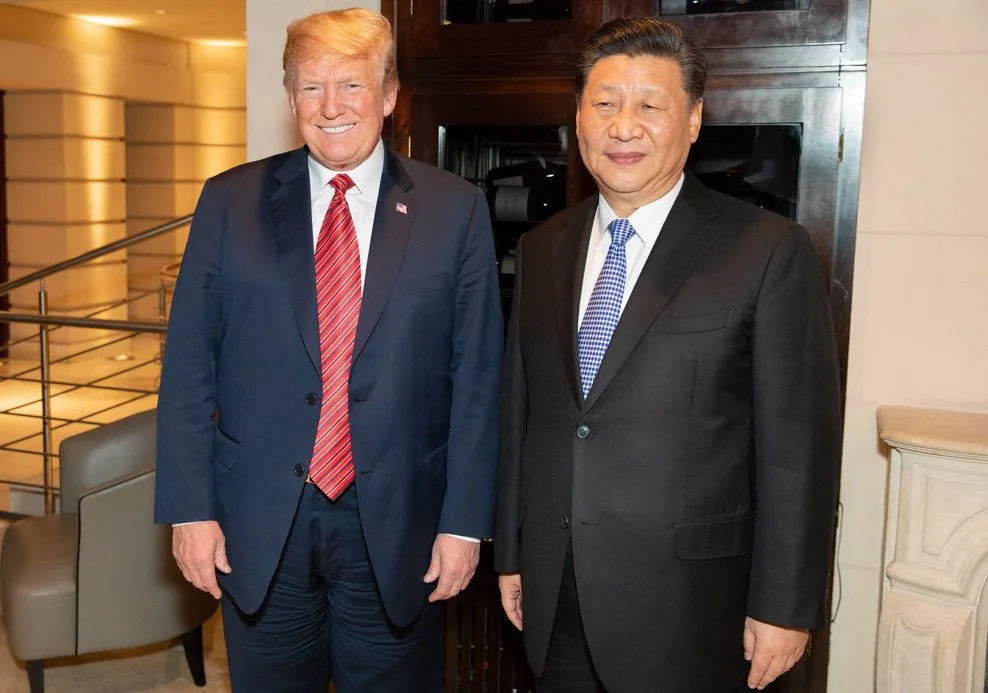
WASHINGTON — Chinese President Xi Jinping commenced a historic state visit to the United States on Wednesday, arriving at Andrews Air Force Base for a formal planeside welcome by President Donald Trump. The arrival signals a significant diplomatic engagement between the world’s two largest economies, set against a backdrop of complex trade negotiations and geopolitical tensions.
The visit, which marks the first in-person meeting between the two leaders in several years, is expected to focus on bilateral trade imbalances, technology restrictions, and regional security issues in the Asia-Pacific. White House officials described the itinerary as a comprehensive review of the U.S.-China relationship, with both heads of state scheduled to hold closed-door talks followed by a joint press conference.
High-Stakes Diplomatic Agenda
The diplomatic groundwork for the visit has been extensive, involving months of shuttle diplomacy by senior officials from both nations. The agenda is expected to address the ongoing friction over semiconductor export controls, which Beijing has repeatedly criticized as protectionist measures aimed at stifling China’s technological advancement. In response, U.S. policymakers have maintained that these restrictions are necessary to protect national security and intellectual property rights.
Economic observers note that the visit carries substantial weight for global markets. The U.S. and China collectively account for nearly 40% of global GDP, and any shifts in their trade policies could have immediate ripple effects on supply chains worldwide. Key topics of discussion include the status of agricultural exports, particularly soybeans and corn, which have been central to previous trade deals. Additionally, the fate of Huawei and other Chinese tech firms under U.S. sanctions remains a contentious issue likely to be raised during the bilateral talks.
Political Reactions in Washington
The visit has drawn mixed reactions from the U.S. Congress. While some lawmakers view the engagement as a necessary step toward de-escalation, others have expressed skepticism about the outcomes. Representative Chrissy Houlahan, a Democrat from Virginia, issued a statement ahead of the meeting, urging the administration to hold Beijing accountable for alleged intelligence sharing with Iran that she claims resulted in U.S. troop deaths. Houlahan’s remarks highlight the broader security concerns that underpin the diplomatic dialogue, suggesting that economic cooperation may be secondary to strategic competition.
“We must ensure that any agreements reached are enforceable and that China honors its commitments,” Houlahan said in a written statement. “The safety of American personnel and the integrity of our intelligence networks are non-negotiable.”
White House press secretary Karine Jean-Pierre, speaking at a briefing, emphasized the administration’s commitment to a “stable and predictable” relationship with China. “President Trump is focused on delivering results for American workers and farmers,” she said. “This visit is an opportunity to reset the tone of our bilateral relationship and address the issues that matter most to both our countries.”
Historical Context and Precedent
State visits between the U.S. and China are rare and carry significant symbolic weight. The last comparable visit by a Chinese leader to Washington occurred in 2017, when President Xi met with then-President Donald Trump in Mar-a-Lago. Since then, relations have deteriorated due to the trade war, the pandemic, and increasing military posturing in the South China Sea.
Analysts suggest that the current visit may serve as a test of whether the two nations can establish a new framework for managing their rivalry. The inclusion of a planeside welcome, a protocol typically reserved for the highest level of diplomatic courtesy, underscores the importance both sides place on the engagement. However, observers caution that symbolic gestures do not guarantee substantive breakthroughs, particularly on issues where fundamental strategic interests diverge.
The visit is expected to conclude on Friday, with both leaders issuing a joint statement outlining the key takeaways from their discussions. Markets in Asia and Europe are closely monitoring the developments, with investors seeking clarity on the future trajectory of U.S.-China economic ties.
Primary Sources & Official Records
- White House rolling out red carpet for historic Xi Jinping visit
- White House rolling out red carpet for historic Xi Jinping visit – BBC
- China’s Xi kicks off state visit to Washington on Wednesday with a rare planeside welcome
- Ahead of Xi White House Meeting, Congresswoman Chrissy Houlahan Joins Democratic Veterans