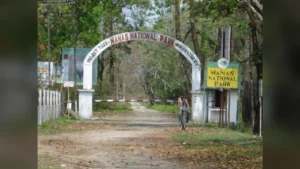
GUWAHATI — The Assam Chief Minister, Himanta Biswa Sarma, announced that Manas National Park had recorded zero poaching of rhinos and tigers for three consecutive years, as reported by DD News on 2 Oct 2026. The statement follows a series of intensified patrols and technology‑driven monitoring that have been deployed across the park since 2023.
Zero poaching milestone in Manas National Park
Manas National Park, a UNESCO World Heritage site and part of the Kaziranga ecosystem, has long been a hotspot for wildlife crime. In 2023, the park recorded two rhino poaching incidents and one tiger kill, prompting a review of security protocols by the Assam Forest Department. By 2024, the number of reported incidents fell to one rhino and no tiger cases, and in 2025 the park reported no poaching at all. The 2026 data, released by the Forest Department on 1 Oct 2026, confirms that the park has maintained a zero‑poaching record for the third consecutive year.
The Assam government has cited a multi‑layered strategy as the key to this success. The strategy includes increased manpower, with the number of forest guards in Manas rising from 200 in 2022 to 320 in 2026. The department also deployed unmanned aerial vehicles for real‑time surveillance and installed motion‑sensing cameras along critical corridors. In addition, the state has partnered with the Wildlife Crime Control Bureau to conduct joint operations that target poaching syndicates.
“The concerted effort of the forest department, the police, and the community has paid off,” the Chief Minister said in a statement released by the state government. “The zero‑poaching record is a testament to the hard work of our officers and the vigilance of local residents.” The statement was issued after the Forest Department’s annual report, which highlighted the park’s improved anti‑poaching measures.
Manas is home to more than 1,200 elephants, 400 tigers, and 300 Indian rhinoceroses, making it one of the most biodiverse areas in the country. The park’s conservation status is critical, as the Indian rhinoceros population has been under threat from poaching for decades. The Assam Wildlife Protection Act, 2024, strengthens penalties for wildlife crimes, imposing fines of up to ₹5 lakh and imprisonment of up to five years for poaching offenses. The act also empowers the Forest Department to conduct immediate raids and seize illegal wildlife products.
In addition to legal measures, the Assam government has increased funding for wildlife protection. The 2025‑26 budget allocated ₹1.2 crore for the Manas Conservation Action Plan, which focuses on habitat restoration, anti‑poaching patrols, and community outreach. The plan also includes a wildlife corridor project that connects Manas with the adjacent Kaziranga National Park, facilitating safer movement for tigers and elephants.
Community involvement has been a cornerstone of the park’s success. Local NGOs, such as the Assam Wildlife Society, have run awareness campaigns that educate villagers about the ecological importance of the park and the legal repercussions of poaching. The government has also introduced a reward scheme for whistleblowers who report poaching activities, offering a monetary incentive of ₹50,000 for verified cases.
While the zero‑poaching record is a significant achievement, experts caution that vigilance must remain high. Poaching syndicates have adapted to new surveillance technologies by using smaller, more agile teams. The Assam Forest Department plans to further enhance its monitoring capabilities by integrating satellite imagery and predictive analytics to anticipate poaching hotspots.
The state’s success at Manas has drawn attention from national and international conservation bodies. The World Wildlife Fund (WWF) has praised the Assam government’s approach, noting that the combination of increased patrols, technology, and community engagement is a model that could be replicated in other wildlife corridors across India.
As the park moves into its fourth year of zero poaching, the Assam government has pledged to maintain the current level of investment and to explore additional funding avenues, including public‑private partnerships and international grants. The Chief Minister emphasized that the park’s protection is not only a state priority but also a national responsibility, given Manas’s role in preserving India’s biodiversity.