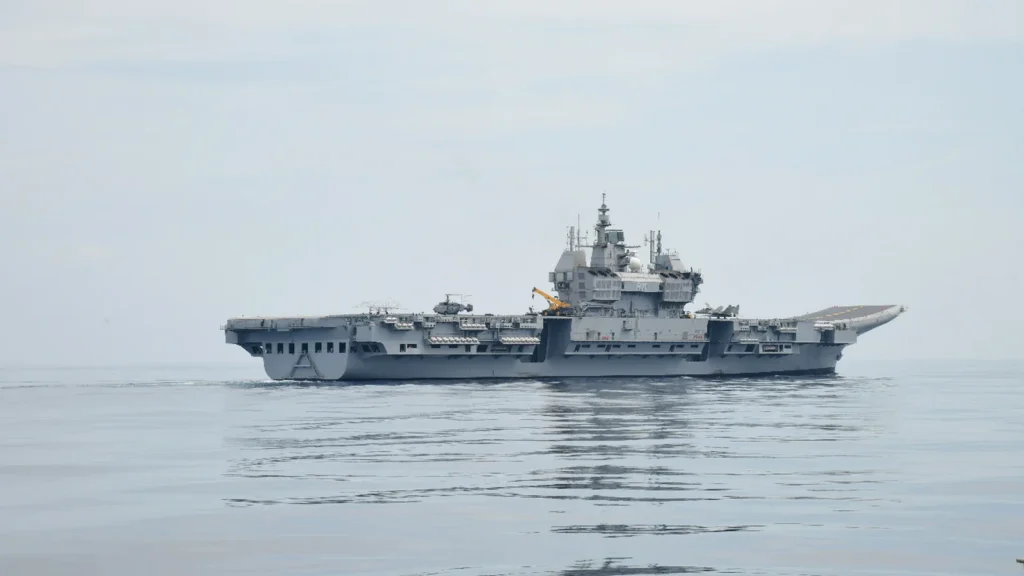
NEW DELHI — The Indian Navy announced a target of 230 indigenous warships by 2045, expanding on a 200‑plus ship plan outlined for 2035. The move follows a strategic review that cites heightened competition in the Indian Ocean Region, particularly from China and Pakistan.
Strategic rationale
The navy’s expansion plan is framed as a response to increased naval activity by regional powers. Officials note that China’s deployment of aircraft carriers and submarines in the Indo‑Pacific has accelerated India’s push for a larger, home‑built fleet. The navy also cites Pakistan’s recent procurement of surface combatants as a factor in its long‑term force‑structure calculations.
Fleet composition and timelines
According to the latest statements, the 230‑ship goal includes surface combatants, submarines, amphibious vessels, and auxiliary ships. The navy aims to have more than 200 ships in service by 2035, a benchmark set in earlier public communications. The additional 30 ships slated for the 2045 horizon are expected to be advanced platforms incorporating stealth features and integrated combat systems.
Under the Make in India programme, the navy intends to source the majority of hulls, propulsion systems, and combat equipment from domestic shipyards and defence firms. The Ministry of Defence has earmarked increased funding for shipbuilding projects, though exact budget allocations were not disclosed in the public briefings.
Indigenous shipbuilding capacity
Domestic shipyards such as Hindustan Shipyard Ltd., Garden Reach Shipbuilders & Engineers, and Mazagon Dock Shipbuilders are slated to receive contracts for the new vessels. The navy’s procurement strategy emphasizes joint ventures with private sector partners to accelerate technology transfer and reduce reliance on foreign suppliers.
Admiral Dinesh K. Tripathi, Chief of Naval Staff, indicated that the navy’s self‑reliance target aligns with the broader national defence policy. He emphasized that indigenous production would shorten delivery timelines and improve lifecycle support for the fleet.
Budgetary and policy framework
The defence budget for the fiscal year 2026‑27 includes a line item for naval expansion, reflecting the government’s commitment to the programme. The budget documents reference the navy’s long‑term shipbuilding plan but do not break down individual project costs.
Policy directives from the Ministry of Defence call for the integration of indigenous sensors, weapons, and electronic warfare suites into new ships. The navy has also issued guidelines for the standardisation of platform design to facilitate maintenance and interoperability across the fleet.
Challenges and next steps
Industry analysts note that scaling up production to meet the 230‑ship target will require sustained investment in shipyard infrastructure, skilled labour, and supply‑chain resilience. The navy plans to conduct periodic reviews of the programme’s progress, with the next milestone review scheduled for early 2027.
Stakeholders, including the Ministry of Shipping and the Department of Heavy Industry, are expected to coordinate on port facilities and logistical support for the expanded fleet. The navy will also seek to finalise contracts for next‑generation submarines and surface combatants within the next twelve months.