NEW DELHI — India’s space agency, the Indian Space Research Organisation (ISRO), released a detailed schedule on Monday that charts its major projects through 2030, following the successful Moon landing of Chandrayaan‑3 on 23 August 2026. The roadmap prioritises the crewed Gaganyaan mission, a reusable launch vehicle demonstrator, the small‑satellite SSLV, a semi‑cryogenic SCE‑200 engine and a follow‑up lunar rover mission. ISRO officials said the plan reflects a “balanced mix of scientific, commercial and human‑spaceflight goals” and aligns with the ₹12,000 crore budget approved for the 2026‑27 fiscal year.
Human Spaceflight Takes Center Stage
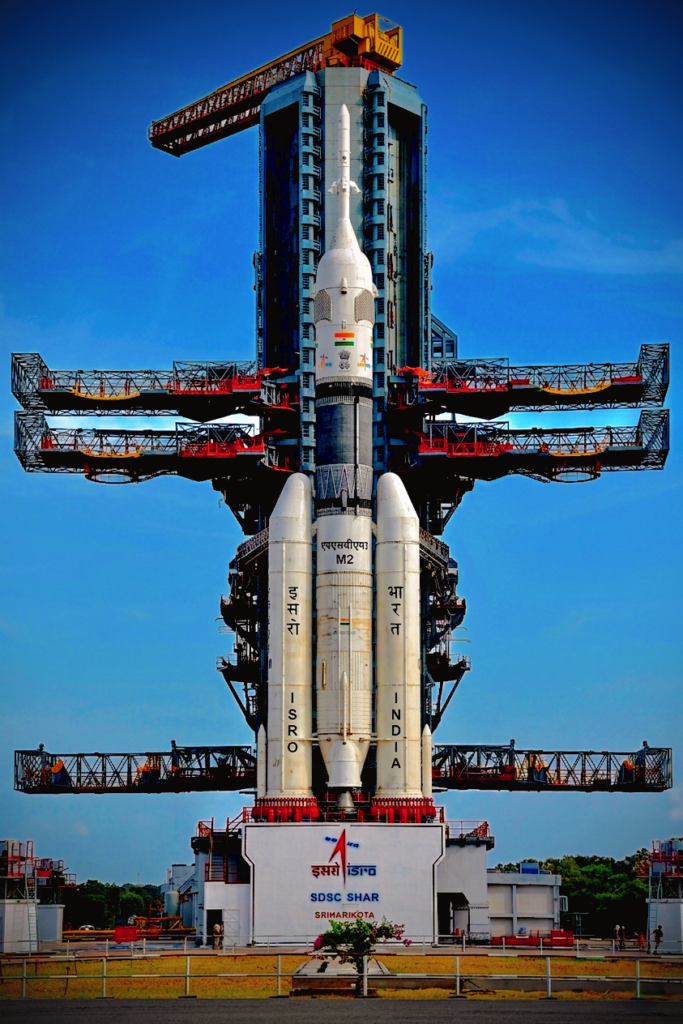
Gaganyaan, India’s first crewed flight, is slated for a 2027 launch from the Satish Dhawan Space Centre. The mission will carry two Indian astronauts on a three‑day orbital flight before returning to Earth. ISRO Chairman S. Somanath told reporters that the agency has completed all critical system tests, including the crew module’s environmental control and life‑support upgrades introduced after Chandrayaan‑3. “We have incorporated lessons learned from the lunar lander to improve redundancy and safety,” Somanath said. The government has earmarked ₹3,500 crore for Gaganyaan’s final development phase, covering astronaut training, launch‑vehicle certification and ground‑support infrastructure.
Reusable Launch Vehicle and Semi‑Cryogenic Engine
ISRO’s reusable launch vehicle technology demonstrator (RLV‑TD) will conduct its first sub‑orbital flight in late 2026, with a full orbital test planned for 2028. The vehicle uses a winged spaceplane design that can glide back to a runway, reducing launch costs by an estimated 30 %. Parallel to the RLV‑TD, ISRO is advancing the SCE‑200 semi‑cryogenic engine, a 200‑tonne‑force thrust unit intended for the next generation of heavy‑lift rockets. The engine’s hot‑fire test is scheduled for early 2025, and a flight‑ready version will be integrated into the RLV‑TD by 2027. Both projects are funded under the ₹2,200 crore “Advanced Propulsion” line item.
Small‑Satellite Launch Vehicle Gains Commercial Traction
The Small Satellite Launch Vehicle (SSLV), designed to carry payloads up to 500 kg to low‑Earth orbit, completed its maiden flight in 2024 and is now entering commercial service. ISRO expects the SSLV to launch at least 12 missions in the next two years, targeting both domestic and international customers. A recent press release noted that the SSLV’s cost per kilogram is projected at ₹1.2 lakh, roughly half the price of the PSLV. The agency has allocated ₹1,000 crore to expand SSLV production capacity and streamline turnaround times.
Lunar and Planetary Ambitions
Building on Chandrayaan‑3’s lander‑rover architecture, ISRO announced Chandrayaan‑4, a rover‑only mission scheduled for 2028. The rover will explore the lunar south‑pole region, focusing on water‑ice deposits and regolith composition. ISRO will reuse the propulsion and navigation systems refined during Chandrayaan‑3, while adding a new drill capable of reaching 2 meters below the surface. Budgetary support for Chandrayaan‑4 totals ₹1,800 crore.
Beyond the Moon, ISRO is preparing a second Mars orbiter, Mangalyaan‑2, slated for a 2029 launch. The mission will carry a high‑resolution camera and a methane‑sensing spectrometer to probe the Red Planet’s atmosphere. A Venus atmospheric probe, Shukrayaan‑1, is also in the pipeline for a 2030 launch, marking India’s first foray into Venus exploration.
Commercial and International Partnerships
ISRO’s roadmap emphasizes revenue‑generating services. The agency signed a memorandum of understanding with the United Arab Emirates in March 2026 to provide SSLV launch slots for Emirati small‑satellite constellations. Additionally, ISRO is negotiating a joint lunar‑surface experiment with the European Space Agency, leveraging Chandrayaan‑4’s payload capacity. These collaborations are expected to contribute an estimated ₹500 crore in foreign exchange earnings by 2030.
Overall, ISRO’s post‑Chandrayaan‑3 plan reflects a shift toward diversified capabilities: human spaceflight, reusable launch technology, commercial small‑satellite services and deep‑space exploration. The agency’s officials say the schedule is “aggressive but achievable,” contingent on sustained funding and successful test flights in the coming months.
Primary Sources & Official Records
- Explained | After Chandrayaan-3, what has ISRO planned?
- Explained: The Role Sun Will Play In Chandrayaan-3’s Landing On Moon – NDTV
- Chandrayaan-3: All you need to know about the mission and what happens after its successfu
- ‘ISRO has improved Chandrayaan-3’s systems and lander’: Journalist Chethan Kumar – The New