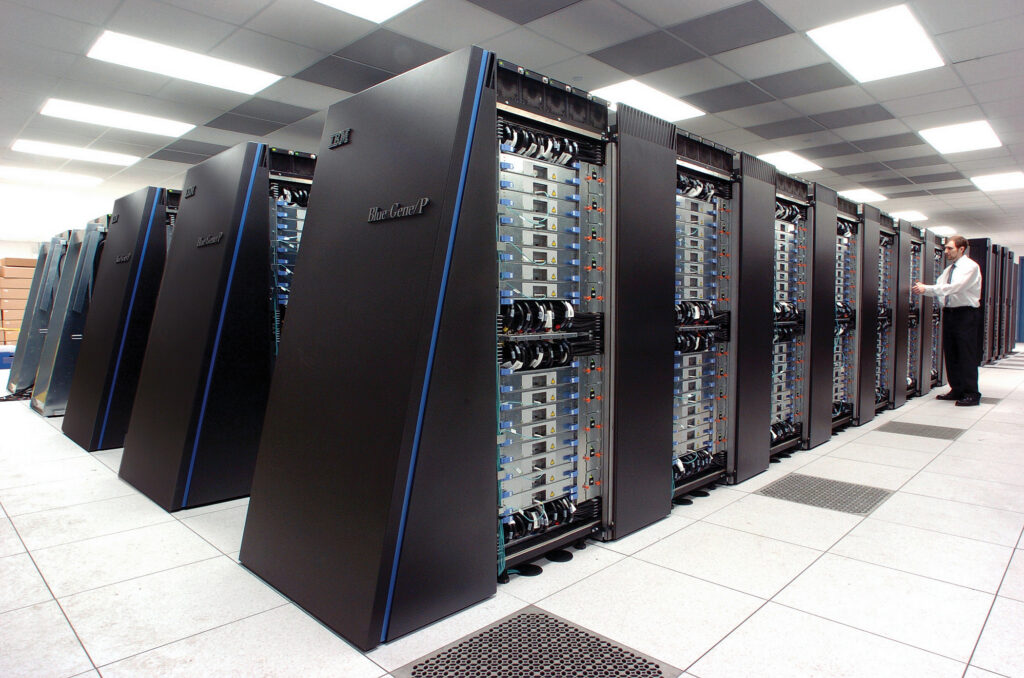
NEW DELHI — UAE‑based cloud‑computing firm G42 and U.S. chipmaker Cerebras Systems announced plans on Sept. 23, 2026 to install an 8‑exaflop artificial‑intelligence supercomputer in India. The project, unveiled at the AI Impact Summit in Bengaluru, will be the country’s first exaflop‑scale AI infrastructure and is slated for completion by 2029.
The system, built around Cerebras’ Wafer‑Scale Engine 3 (WSE‑3) processor, will deliver 8 exaflops of peak performance—equivalent to eight billion billion operations per second. G42 will provide the data‑center facilities and cloud integration, while Cerebras will supply the custom silicon and software stack. Together, the partners expect the platform to accelerate deep‑learning workloads in sectors ranging from drug discovery to climate modelling.
Strategic motivations
India’s Ministry of Electronics and Information Technology (MeitY) has framed the venture as a “strategic boost” for the nation’s AI ecosystem. In a statement released to the press, the ministry said the supercomputer will “enable Indian researchers and enterprises to run models that were previously out of reach, fostering home‑grown innovation and reducing reliance on foreign cloud services.”
The collaboration also aligns with the United Arab Emirates’ broader push to position itself as a global AI hub. G42’s CEO, Peng Xiao, told summit attendees that the partnership reflects “mutual confidence in each other’s talent pools and a shared vision for responsible AI development.”
Economic and policy backdrop
India’s AI market is projected to reach ₹1.2 trillion ($14.5 billion) by 2030, according to a recent MeitY forecast. The government has earmarked ₹25,000 crore for AI research and infrastructure under its National AI Strategy, but has yet to disclose the exact share allocated to the G42‑Cerebras project.
Under the India‑UAE Comprehensive Strategic Partnership, signed in 2022, both countries pledged to cooperate on emerging technologies. The new supercomputer is the latest concrete outcome of that agreement, complementing earlier joint ventures in quantum computing and satellite communications.
Technical details
Cerebras’ WSE‑3 chip measures 46,225 mm² and integrates 2.6 billion transistors, making it the largest processor ever fabricated. When tiled together, the chips form a single logical node capable of delivering the advertised 8 exaflops. G42 will host the hardware in a purpose‑built data centre in Hyderabad’s Cyberabad district, leveraging the city’s robust power grid and fiber‑optic backbone.
The platform will run Cerebras’ CS‑2 software stack, which includes a custom compiler and a suite of pre‑optimized deep‑learning libraries. G42 will layer its own AI‑as‑a‑service offerings on top, allowing Indian startups and research institutions to access the compute via subscription.
Industry reaction
Domestic AI firms welcomed the announcement, citing the need for larger compute resources to stay competitive. “We have been waiting for an exaflop‑class system that can handle next‑generation models,” said Ananya Rao, co‑founder of Bengaluru‑based startup DeepVision. “This will level the playing field with global players.”
International observers noted the geopolitical dimension. “The UAE’s investment in Indian AI infrastructure signals a shift toward diversified tech alliances beyond the traditional US‑China axis,” wrote technology analyst Rohan Mehta of the Centre for Policy Research.
Regulatory and security considerations
MeitY’s statement emphasized that the supercomputer will operate under India’s data‑sovereignty framework. All data processed on the platform will be stored on Indian soil, and the system will be subject to periodic audits by the National Critical Information Infrastructure Protection Centre (NCIIPC).
Security experts also highlighted the need for robust safeguards given the system’s capability to train large language models. “Exaflop‑scale compute can accelerate the creation of powerful generative AI, which raises concerns about misuse,” warned Dr. Priya Nair, a senior researcher at the Indian Institute of Technology Delhi. “Transparent governance will be essential.”
Next steps
Construction of the Hyderabad data centre is expected to begin in early 2027, with the first batch of WSE‑3 chips arriving by mid‑2028. G42 and Cerebras plan to roll out a pilot program for select Indian research labs in the fourth quarter of 2028, followed by broader commercial availability in 2029.
The partnership marks a significant milestone in India’s quest for home‑grown AI leadership and underscores the growing role of Gulf capital in the country’s technology landscape.
Primary Sources & Official Records
- UAE’s G42, Cerebras Plan 8-Exaflop AI Supercomputer in India
- Abu Dhabi to deploy exaflop-scale AI infrastructure to India – News On AIR
- Cerebras plans humongous AI supercomputer in India backed by UAE – The Register
- AI Impact Summit: UAE’s G42 to build 8 exaflop AI supercomputer in India – ET Enterprise A