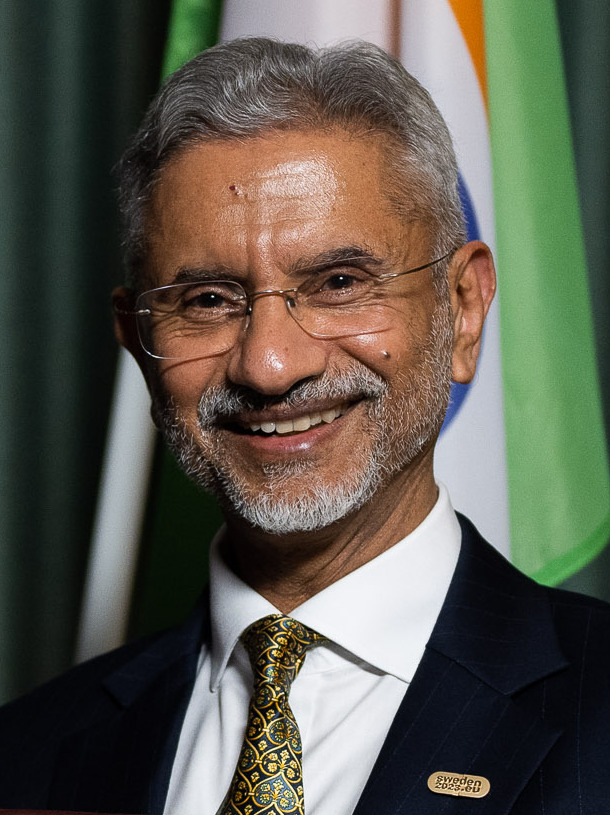
NEW DELHI — India’s foreign minister, S Jaishankar, reiterated concerns over a U.S. sanctions bill aimed at Russia during a meeting with U.S. Senator Marco Rubio at the United Nations General Assembly on 23 September 2026. The discussion focused on the potential impact of the sanctions on Indian businesses and the broader diplomatic relationship between the two countries.
India’s Strategic Balance Amid Sanctions
Jaishankar met Rubio in the UN General Assembly hall, a venue that has become a platform for high‑level diplomatic exchanges. The meeting followed a series of bilateral talks between the two officials earlier in the week, during which India’s foreign policy priorities were highlighted. Jaishankar emphasized that India seeks a balanced approach to the sanctions, stressing the importance of maintaining strategic autonomy while engaging with both Russia and the United States.
The U.S. sanctions act, formally known as the “Russia Sanctions Act,” was introduced in the U.S. Senate in 2024 and seeks to impose restrictions on Russian entities and individuals linked to the conflict in Ukraine. The bill has provisions that could affect foreign companies, including those from India, that do business with sanctioned Russian firms. Jaishankar warned that the sanctions could create uncertainty for Indian exporters and investors operating in Russia.
Impact on Indian Businesses
India has long maintained a pragmatic relationship with Russia, with trade in defense equipment, energy, and pharmaceuticals. The sanctions could disrupt supply chains and financial transactions for Indian firms that have ties to Russian partners. Jaishankar noted that the Indian government is monitoring the situation closely and is ready to engage with U.S. counterparts to mitigate potential disruptions.
In a statement released by the Ministry of External Affairs, officials said that India would not be a party to the sanctions but would seek clarity on how the measures would affect Indian entities. The ministry also highlighted that India’s trade with Russia accounts for approximately ₹1.2 trillion in 2025, underscoring the economic stakes involved.
US Stance and Diplomatic Implications
Marco Rubio, a senior U.S. senator and former governor of Florida, acknowledged India’s concerns during the meeting. He reiterated that the United States would consider India’s perspective in the ongoing discussions about the sanctions. Rubio’s remarks were consistent with the U.S. policy of engaging allies to build a unified front against Russian aggression.
While the U.S. has expressed willingness to address concerns from partner nations, it has also emphasized the need to maintain pressure on Russia. The sanctions act is part of a broader U.S. strategy to curb Russian influence and support Ukraine. Jaishankar’s remarks reflect India’s attempt to navigate the complex geopolitical landscape without compromising its strategic interests.
India’s foreign policy has historically balanced relations with both Russia and the United States. The country has sought to deepen defense cooperation with the U.S. while maintaining a constructive relationship with Russia. The sanctions act presents a challenge to this balancing act, prompting India to engage in diplomatic dialogue to safeguard its interests.
In the days following the meeting, the Indian government released a brief that reiterated its commitment to a multilateral approach to sanctions and called for a transparent dialogue on the implementation of the Russia Sanctions Act. The brief also urged the United States to consider the economic implications for partner countries.
Primary Sources & Official Records
- Jaishankar ‘reiterates India’s interests & concerns’ over Russia sanctions act in talk
- Jaishankar meets Rubio at UNGA, raises India’s concerns over Russia sanctions bill – Money
- S Jaishankar Meets Marco Rubio; Raises India’s Concerns Over Russia Sanctions Act – News M
- India foreign minister says reiterated concerns over Russia sanctions act to Rubio – Yahoo